The Essence of Politics

Sunday, August 30, 2009

The War on Our Youth—Youth Are Officially not Prepared for College

Our nation continues to fight an age old issue of how to best educate our youth. Last week, the College Board released its average scores of the SAT and it shows that the high school class of 2009 numbers are down from last years class. Average scores on the SAT college entrance exam dipped slightly for the high school class of 2009, while gender, race and income gaps widened, according to figures released by the College Board. The average SAT score dipped from 502 last year to 501 on the critical reading section of the test. Math scores held steady at 515, and writing fell from 494 to 493. Each section has a maximum score of 800. More than 1.5 million members of the class of 2009 took the exam, which remains the most widely used college entrance exam despite recent gains by another test, the ACT. The SAT tries to measure basic college-readiness skills, while the ACT is more focused on what students have learned in the classroom.

Average SAT scores were stable or rising most years from 1994 to 2004, but have been trending downward since. That's likely due in part to the widening pool of test-takers. That's a positive sign more students are aspiring to college, but it also tends to weigh down average scores. Forty percent of students in this year's pool were minorities and more than one-third reported their parents had never attended college. More than a quarter reported English was not their first language at home. However, the scores also indicate a widening of the gaps that have made the test a target for critics of standardized testing. On the three combined sections, men scored 27 points higher on average than women, compared to 24 points higher last year. That gap is mostly attributable to men's higher math scores. Average combined scores for white students declined two points, but scores for black students fell four points, widening the racial gap. Average scores for two of the three categories the College Board uses for identifying Hispanics also declined.

Meanwhile, average combined scores by students reporting their families earned over $200,000 surged 26 points to 1702, an increase that could fuel further criticism the test is too coachable and favors students who can afford expensive test-prep tutoring. The College Board, the not-for-profit organization that administers the exam, strongly discourages comparing and ranking states and districts based on SAT results. The test-taking population can vary considerably, and the College Board argues rankings may discourage schools from pushing students to apply for college. Still the fact that more of youth are not ready for college should make all of us upset and the fact that the SAT scores show disparities by race, gender, family income

The fact that the average national SAT scores for the high school class of 2009 dropped two points compared with last year and while the population of test takers was the most diverse ever, average scores vary widely by race and ethnicity. On one end, students who identified themselves as Asian, Asian-American or Pacific Islander posted a 13-point gain. On the other end, students who identified themselves as Puerto Rican posted a 9-point drop in average scores. The SAT's owner, the nonprofit College Board, highlighted the 40% minority participation rate among test-takers this year, up from 38% last year and 29.2% in 1999. "We are tremendously encouraged by the increasing diversity," said College Board president Gaston Caperton. "More than ever, the SAT reflects the diversity of students in our nation's classrooms."

But Bob Schaeffer, spokesman for the National Center for Fair & Open Testing, a critic of standardized tests, says what stands out to him "is widening gaps of all sorts — race, gender and income — at a time when the nation is spending billions of dollars allegedly trying to close those gaps. The promise of No Child Left Behind and of many high-stakes state testing programs is that testing is going to improve educational quality. That's not what the data show." The differences in total SAT scores by ethnicity was most extreme between Asian students (1623 out of 2400) and black students (1276, a four-point drop). Puerto Rican students averaged 1345. The national average was 1509. Top score is 800 in each of the three SAT sections. Total scores also dropped two points on average for white students (1581) and Mexican and Mexican American students (1362), and increased two points for American Indian or Alaskan natives (1448).

Disparities in scores by gender and income also widened. The average scores dropped 5 points for females and 2 points for males. While females represent more than half (53.5%) of test takers, their total average score (1496) is 27 points below that of males (1523). The highest average score of all (1702, up 26 points) was posted by students who said their families earned more than $200,000 a year. Students whose reported family income was less than $20,000 a year averaged 1321, up 1 point. The report's analysis notes that students who had completed a core curriculum, taken their school's most rigorous courses and familiarized themselves with the test were among the strongest performers. For example, students who took an Advanced Placement or honors math course scored on average 79 points above the national average math score. And students who had previously taken the Preliminary SAT/National Merit Scholarship Qualifying Test scored 121 points higher on average than those who did not take the test. "The SAT directly reflects what students have learned in school and how they use that knowledge," said senior vice president Laurence Bunin. "That's why the latest research continues to validate that the SAT, when combined with high school grades, is the best predictor of college success."

Nonetheless, all hope shouldn’t be lost in this war on youth because students can still improve their SAT scores. In fact a mere 30 point bump on the SAT can pay off big in college admissions. A 30-point boost in math and critical-reading scores on the SAT reasoning test is statistically meaningless yet could make or break a student's chances of admission at "a substantial minority" of colleges, a research paper says. And the more selective the college, the more that bump pays off, it finds. The study, based on a survey of 246 college admission officials nationwide and being released today by the non-profit National Association for College Admission Counseling, was commissioned to explore the effect of test preparation for college admission exams. But the report also raised concerns about whether some colleges use test scores inappropriately.

Various independent studies estimate that coaching can improve a test-taker's math and reading scores by 30 points on average — a bump so small on the 1600-point SAT sections that the College Board, which owns the test, says it could be attributed to measurement error. Yet in the new study, 20% to 40% of officials at 130 colleges that consider the SAT in admissions said a 20-point math increase or a 10-point reading increase would "significantly improve a student's chances of admissions" if all other factors in a student's application were the same. "If marginal college admission decisions are made on the basis of very small differences in test scores, a small coaching effect might be practically significant," says author Derek Briggs of the University of Colorado-Boulder. Briggs says he was "pretty stunned" by the findings, given that the College Board and makers of the ACT entrance exam caution against using scores as a sole criterion for high-stakes decisions such as admissions and scholarships. (He did not probe as deeply into ACT data but he says "it is very likely" findings would be similar.) The association for admissions professionals similarly cautions against such practices.

The association said in a statement that the misuse Briggs found is a problem in "a small number of cases." But it added, "These realities are likely to complicate the decisions of students and families trying to determine how best to allocate (time and money) related to test preparation." Association CEO Joyce Smith said the organization plans to "initiate a new round of communications and training" for member colleges and universities. William Fitzsimmons, dean of admission and financial aid at Harvard University and chairman of a commission created by the association that last September urged research on the subject, says most schools probably use the test appropriately, but "misuse of test scores is a major public policy issue."

Nonetheless, there are still admissions groups that have concerns about the misuse of the PSAT, SAT and ACT. Back in September 2008, the National Association for College Admission Counseling (NACAC) released a report raising concerns about the misuse of standardized test scores. The concerns were outlined by members of the Commission on the Use of Standardized Tests in Undergraduate Admission, led by Harvard admissions dean William Fitzsimmons. The report raised a bit of a stir, and NACAC said members intended to look into the commission's recommendations carefully. Today, NACAC today is posting online its recent correspondences with three key testing stakeholders -- the College Board (which makes the SAT), the National Merit Scholarship Corporation (or NMSC, which uses the PSAT/NMSQT as a preliminary screen) and the ACT (which makes the ACT) -- saying, that the admissions counseling group hope those organizations will cooperate with them as they work to "ensure that the recommendations ... come to fruition."

You can read those letters here (see * below). Suffice it to say that all three organizations look forward to working together with NACAC, etc., etc. Well, sort of. ACT also said, "we do not believe that all of the commission's findings are consistent with the available facts." The College Board noted that a 2004 College Board Trustee Task Force concluded that the NMSC process for choosing scholarship met "the highest and most strenuous national standards on testing." And NMSC's top officials wrote that they "fully concur" with the College Board's comments. In its response, also posted and sent to reporters, NACAC said it, too, looks forward to working with organizations, etc., etc. But, it added: the College Board and National Merit Scholarship Corporation "did not directly address NACAC's concerns."

While it is "encouraged" by the College Board and ACT’s internal audits to ensure proper test use, "our experience has shown that continued attention and oversight may be necessary to ensure ethical practice in admission." In response to a comment by ACT that the commission appear to think (wrongly) that the ACT and the SAT are "based on identical philosophies and that they measure the same skills," responded that the commission knows perfectly well what the differences between the two tests are, but that is largely irrelevant. There's more. Soon, NACAC says, it will come out with its "first major research effort" since that report, on test preparation. And this fall, it plans to unveil a new textbook on the fundamentals of college admission testing and it can be found at www.nacacnet.org.

Therefore we have to do better as a nation to help improve the conditions of education for our youth. If our youth can’t pass the SAT or ACT than how in the world can we say that our youth are prepared for college. Forget all the state tests and promotional tests, at the end of the day, if our youth can’t pass the SAT and ACT than that is a clear sign that we are properly educating our youth prior to college. The war on our youth can’t be won without preparing our youth for college. We have to cut all the bureaucracy out when it comes to education. Our youth need us to prepare them to be globally competitive but at the same time they us to prepare them for college. I have constantly said we can win this war but it starts with really looking at the problems plaguing our youth. We can no longer ignore the fact that many of our youth are not prepared for college and that our educational systems as well as standards are not preparing them for college. Therefore if we are to win this war, we must change how we teach our youth, we must change how we engage them academically and most importantly we must get rid of teaching students to pass tests. Instead of we need to teach students not just to survive but to learn and prosper and that is how this war on our youth is going to be won.


SAVE OUR YOUTH!

Japanese election upends long-ruling party--By Eric Talmadge, Associated Press Writer

Japan's opposition swept to a historic victory in elections Sunday, crushing the ruling conservative party that has run the country for most of the postwar era and assuming the daunting task of pulling the economy out of its worst slump since World War II.

A grim-looking Prime Minister Taro Aso conceded defeat just a couple hours after polls had closed, suggesting he would quit as president of the Liberal Democratic Party, which has ruled Japan for all but 11 months since 1955.

"The results are very severe," Aso said. "There has been a deep dissatisfaction with our party."
Unemployment and deflation — and an aging, shrinking population — have left families fearful of what the future holds.

Fed up with the LDP, voters turned overwhelmingly to the opposition Democratic Party of Japan, which ran a populist-leaning platform with plans for cash handouts to families with children and expanding the social safety net.

"This is a victory for the people," said Yukio Hatoyama, leader of the Democrats and almost certainly Japan's next prime minister. "We want to build a new government that hears the voices of the nation."

Hatoyama and his party — an eclectic mix of former Liberal Democrats, socialists and progressives — face a daunting array of challenges, economic and demographic.

Japan's economy has been hit hard amid the global recession and falling demand for its exports. The unemployment rate has spiked to a record 5.7 percent and younger workers have watched the promise of lifetime employment fade. Incomes are stagnant and families have cut spending.

The country also faces threats as its population ages, which means more people are on pensions and there is a shrinking pool of taxpayers to support them and other government programs.

The Democrats' plan to give families 26,000 yen ($275) a month per child through junior high is meant to ease parenting costs and encourage more women have babies. Japan's population of 127.6 million peaked in 2006, and is expected to fall below 100 million by the middle of the century.

The Democrats are also proposing toll-free highways, free high schools, income support for farmers, monthly allowances for job seekers in training, a higher minimum wage and tax cuts. The estimated bill comes to 16.8 trillion yen ($179 billion) if fully implemented starting in fiscal year 2013 — and critics say that will only further bloat Japan's already massive public debt.

In foreign relations, the Democrats have said they want Tokyo to be more independent from Washington on diplomatic issues, though they have stressed that the U.S. will remain Japan's key ally and that they want to keep relations good, while also strengthening ties with their Asian neighbors.

Official nationwide results were expected to be announced midmorning Monday, but public broadcaster NHK projected early Monday that the Democrats would win 308 of the 480 seats in the lower house to the LDP's 119, citing local election results. Other parties and independent candidates won a total of 53.

The Democratic Party needed to win a simple majority of 241 seats in the lower house to ensure it could name the next prime minister. The 300-plus level would allow it and its two smaller allies the two-thirds majority they need in the lower house to pass bills.

"It's a historic election in that a clear alternation of power has happened for the first time in the postwar period," said Koichi Nakano, professor of political science at Sophia University in Tokyo. "It's hard to know whether this is going to lead to a real change in policy, at least for the short term."

The loss was only the second the Liberal Democratic Party — traditionally the champion of big business and conservative interests — has suffered since it was founded in 1955. The only other time it was out of power was for less than 11 months in 1993-1994, and that was to a coalition of eight parties that quickly collapsed.

The LDP had survived through previous recessions in Japan but since then families have grown less secure about the future.

With only two weeks of official campaigning that focused mainly on broad-stroke appeals rather than specific policies, many analysts said the elections were not so much about issues as voters' general desire for something new after more than a half century under the LDP.

"All the bad things over the last 54 years finally caught up to them," said Fumio Morita, 45, who runs a bar in Tokyo. "It's good that they are no longer in power."

Japan has had three prime ministers in three years, all of whom were deeply unpopular for their perceived lack of leadership and for failing to get the country out of its deepening economic morass.

The LDP tried to fight back by reminding voters that their party led the nation out of the ashes of World War II. They also argued that the Democrats, who have never run the government, were irresponsible and inept.

Hatoyama's party, which already controls the upper house with two allies, held 112 seats in the lower house before parliament was dissolved in July. The LDP had held 300 seats.

___
Associated Press reporters Mari Yamaguchi, Kelly Olsen, Shino Yuasa and Tomoko Hosaka contributed to this report.

The War on Our Youth—Changing the Mentality of Pre-K students

Today more than ever, it is important for all of us to understand that the war on our youth starts with changing the mindsets of even pre-schoolers. Yes Preschool education may be prison prevention according to an article written by Cheo Tyehimba on August 24, 2009. Cheo explains that when an elementary principal introduced her to "Akil," a lazy-eyed 6 year old enrolled in a kindergarten class at Martin Luther King, Jr. elementary school in West Oakland, she knew I'd been gone too long. She'll never forget him. "That's Akil," said the principal. "He doesn't speak. It's not that he's mute or anything. He just stopped talking. No one has heard him since last year." Akil may have stopped talking but his often-violent acts towards other children were his way of screaming for attention and help. He would spit at other children, knocked books off shelves, yanked television cords from the wall, wrote on the chalkboard, threw things at other children, and hit them constantly. He did all this without uttering a single syllable.

Cheo goes on to say that she knew Akil was only doing what had been done to him by adults but each day during my substitute teaching stint in Oakland's public school system, Akil was a reminder of a nagging question. What can be done to make sure that all kids, particularly black boys, enter kindergarten prepared to succeed? The answer is complex and goes beyond simply relying on Head Start, our chronically under-funded national pre-kindergarten program. And even though more than 40 states offer pre-k programs, largely for 4 year olds, the demand for enrollment often exceeds capacity. Add to this a gulf of disparities in health, education, and employment among some of the parents of under-achieving black boys and the picture can be pretty bleak. Even in states such as California and Maryland, where a history of poorly performing public schools in cities like Oakland and Baltimore have prompted the rise of successful universal preschool programs, black boys - in comparison to their peers in other ethnic groups - are being left behind. Coincidentally, studies report that this target group may have the most to gain from pre-k education.

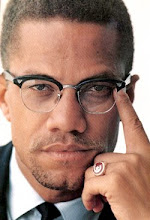
According to the National Institute for Early Education Research, high quality early childhood education programs can increase the likelihood of high school graduation and employment and reduce welfare dependence, school dropout rates, and crime. In fact, the Children's Defense Fund's campaign to stop the "cradle to prison pipeline" documents the fact that we can now clearly see a research-driven trajectory for boys like Akil. Nationally, 1 in 3 black boys born in 2001 are at risk of imprisonment during their lifetime. This sad fact - determined by pre-k readiness and third grade reading scores, among other indicators - is used by corporations within the prison industrial complex to help gauge how many prisons they will build. Apparently there's still some truth to that famous Malcolm X quote, "If you're [born] black in America, you're born in jail." But this can also be used as motivation to support early childhood education and programs that are making long-term commitments to improve outcomes for black males. One such program is the 2025 Campaign for Black Men and Boys, a national public policy and social action effort incubated by the Twenty-First Century Foundation and initially supported by the Ford Foundation. The multi-year, multi-city campaign posits one main question: "What can we do to impact the life of a black boy born in 2007 so that by the time he is 18, in the year 2025, his outcomes for success have significantly improved?"

The answers encompass making significant gains in health, employment, justice, fatherhood, and educational outcomes for black males. And of these, education, especially, pre-kindergarten, may be the most pivotal. Twenty-First Century Foundation partnered with actor-director Mario Van Peebles and producer Karen Williams to create Bring Your "A" Game - a documentary film that, in Van Peebles' words, "sheds light on the resilience and influence of black males" and provides a relevant social context to the challenges for quality education. The film will air on B.E.T. on Sept. 12, 2009. In a recent address to the NAACP, President Obama voiced his support for early childhood education programs and challenged governors, even in these times of economic uncertainty, to make educational improvements a priority. "Today, some early learning programs are excellent. Some are mediocre. And some are wasting what studies show are - by far - a child's most formative years," said the president, whose stimulus bill has already begun to make good on his promise to pour $10 billion into pre-k programs.

Still in my mind, government programs and funding to support universal preschool, while desperately needed to reduce the school "readiness gap" between low-income African Americans and whites, will only go so far. Shoring up educational gaps experienced by young black males will take the same kind of personal accountability and individual "do or die" mantra that propelled movements like civil rights or feminism in this country. Cheo even explains that during her substitute teaching stint in Oakland's public school system, there was never a counselor available to take children like Akil out of class to talk. There was never discussion about finding support for his mother, who was still battling substance-abuse issues. There was never a connection made between the substandard classroom in Oakland and the rising homicide rate in the city. The school administrators were too busy putting out fires to be concerned with how they ignited in the first place. Leadership and personal accountability were sorely absent. These are problems that many schools in urban and rural areas face every day and try to manage them the best they can.

Cheo explains that by the time Akil stopped speaking in kindergarten; it's likely that he was reacting to something that had happened to him during the most important cognitive stage of his life, his first five years. Would pre-school have made the difference? Perhaps, but with recent census data indicating that nearly 70% of black children live without a father in the home, amidst a host of other social and economic disparities, its clear that the crisis in public education requires more than an injection of federal dollars. It requires all of us to think more broadly about the importance of pre-school. With the right mix of parental support, it could mean the difference between a child growing up to one day be measured for a cap and gown... or a prison uniform.

Therefore if people need even more reason or evidence that we need to change the mindsets of preschool students than the most recent research in child development says that 4-year-olds lie once an hour. For more than a century American parents—ever more distanced from grandmothers and ­suspicious of tradition—have looked to social ­science to explain their children to them. Thus they have gobbled up books and articles by experts who ­periodically deliver the latest truths about ­child-rearing. Back in 1945, when Dr. Spock published his "Baby and Child Care," readers' devotion to expert opinion was so intense that he began his book with the reassuring words: "Trust yourself." Not that he ­believed it. The book was jammed with advice. Now, in a book called "NurtureShock," written by Po Bronson and Ashley Merryman, they survey the newest new findings about child development. Little in the book is all that shocking, but given our enthusiasm for turning tentative child ­research into settled policy, the studies that the ­authors discuss are of more than passing interest.

A striking example is the latest research on ­self-esteem. As Mr. Bronson and Ms. Merryman remind us, the psychologist Nathaniel Brandon published a path-breaking paper in 1969 called "The Psychology of Self-Esteem" in which he argued that feelings of self-worth were a key to success in life. The theory became a big hit in the nation's schools; in the mid-1980s, the California Legislature even ­established a self-esteem task force. By now, there are 15,000 scholarly articles on the subject. And what do they show? That high self-esteem doesn't improve grades, reduce ­anti-social behavior, deter alcohol drinking or do much of anything good for kids. In fact, telling kids how smart they are can be ­counterproductive. Many children who are convinced that they are little geniuses tend not to put much effort into their work. Others are troubled by the latent anxiety of adults who feel it necessary to praise them constantly.

The benefits of teaching tolerance and promoting ­diversity look equally unimpressive in the current ­research. According to "NurtureShock," a lot of well-meaning adult nostrums—"we're all friends," "we're all equal"—pass right over the heads of young children. Attempts to increase racial sensitivity in older students can even lead to unintended consequences. One ­researcher found that "more diversity translates into more divisions between students." Another warns that too much discussion of past discrimination can make minority children over-reactive to perceived future slights. As for trying to increase emotional intelligence, the education fad of the 1990s, it doesn't seem to ­promote "pro-social values" either. It turns out that bullies use their considerable EQ, as it is called, to ­control their peers.

Education policy makers will find more cause for embarrassment in "NurtureShock." Drop-out programs don't work. Neither do anti-drug programs. The most popular of them, D.A.R.E (Drug Abuse Resistance ­Education), developed in 1983 by the Los Angeles ­Police Department, has become a more familiar sight in ­American schools than algebra class. By 2000, 80% of American school districts were using D.A.R.E. materials in some form. Now, after extensive study, comes the news: The program has no long-term and only mild short-term, effects. Oh, and those tests that school ­districts use to determine giftedness in young ­children? They're just about useless. According to Mr. Bronson and Ms. Merryman, early IQ tests predict later ­achievement less than half the time. Between ages 3 and 10, about two-thirds of children will experience a rise or drop of 15 points or more.

You might assume from these examples that the ­authors want to make a point about our national ­gullibility in the face of faddish science. Unfortunately, they deconstruct yesterday's wisdom at the same time that they embrace today's—even when research is on the order of "do-we-really-need-a-$50,000-study-to-tell-us-this?" or of dubious practical value. Kids lie, they ­inform us. In fact, 4-year-olds lie once every hour. Still, Mr. Bronson and Ms. Merryman are impressed by ­research showing that "lying is an advanced skill," ­supposedly demonstrating both social and cognitive ­sophistication. As for teenagers, well, they lie too. Parents shouldn't worry about them, though; they fib not ­because they want to get away with stuff they shouldn't be doing but because they don't want to ­upset mom and dad. ­Depending on your point of view, you might not be ­surprised to learn that permissive parents don't get more truth-telling from their teens than stricter ­parents. In any event, teens like conflict because, it is now claimed, they see it as enhancing their ­relationships with their parents.

Given how often last year's science has become ­today's boondoggle, Mr. Bronson and Ms. Merryman's analysis would have benefited from a dose of ­skepticism. Yes, social science has become more ­rigorously empirical in recent decades. A lot of the findings described in "NurtureShock" might even be true. But that doesn't mean that we have the remotest idea how to translate such findings into constructive parental behavior or effective public programs. In a famous 1994 study described by the authors, ­researchers discovered that babies of professional ­parents were exposed to almost three times the ­number of words as the babies of welfare parents. ­Parents took to buying $699 "verbal pedometers," a gadget that counts the number of words their baby is hearing per hour. Now experts are modifying the ­earlier findings. Turns out that it's not so much the number of words kids hear that matters but the responsiveness of adults to a child's words and explorations. Shocked? I doubt it.

Therefore with all of this data and information, it is clear that if we are going to win this war on our youth, we must first change their mindsets when they are young. We must teach our youth to be honesty and to want better out of life. We must begin to teach our youth values, integrity and how to respect others at a young age. We can’t ignore this issue any longer. We have to get to our youth young and show them that life can be better no matter what personal issues they deal with. We have to do better than what we are doing but it starts with us as a community as a nation making sure we give our youth during their early days of learning the proper help they need to succeed. What happens in their home or in their community can and should not hinder their learning flow. We have to prevent our youth from going down the path to be criminals. We have to change the mentality of preschoolers so that they know that they can achieve anything they want to achieve as long as they live morally sound lives that adhere to upstanding values that will mold them into living purposely driven lives.

This is the approach we must take in order to win this war on our youth. If we can’t impact many of our youth when they are young than we will continuously see us lose this fight on our youth. We have to get through to our youth when they are preschoolers so that we can give them another look or perspective on life. Hope shouldn’t die when our youth are young but it should live on within them inspiring them. The flame of hope in our youth should carry them well into their adult years so that they have something to strive for, something to look forward to, and something to carry them to achieve more out of life. Our youth need us now more than ever and it starts from day one when they are born. That is why we all must help to raise our youth especially when parents are not doing their part. This is the era of no excuses; we are all responsible for changing the mindsets of preschoolers, no more excuses or shifting of blame. The buck stops today.

SAVE OUR YOUTH!

Socio-Economics at its Best

The Pew Research Center did a poll on February 13, 2009 asking the five income categories of people confident about the 2009 United States economy. The recent survey details the income categories of people who think the 2009 U.S. economy will improve. 52 percent of people making less than $30,000 Family Income felt confident that the U.S. economy was going to improve. 39 percent of people making between $75K-99,999 Family Income were confident while only 36 percent of those making between $50K-74,999 Family Income were confident. Still for those making between $30K-49,999 Family Income only 36 percent were confident and 34 percent of those making $100K or More Family Income were confident the U.S. economy would improve.

So with confidence levels like that, it is clear that those making the least were the most confident that the U.S. economy would recover while those making the most were not. This is socio-economics at its best because those making the least are hoping that things get better for them and they pass that hope on to their children while those making the most usually just hope that things stay good so that they can continue to grow and they pass that on to their children. Nonetheless the data from the Pew Research Center just shows that many Americans making less than $30,000 a year were more optimistic that the economy would recover while the rest of the nation was less optimistic. However I wonder if a poll was taking today with the Federal budget numbers now being stratospheric would 52% of Americans making less than $30,000 a year be confident the economy would recover although many experts say that the recession is almost over the economy is showing glimmers of hope.

I wonder would the other income levels of people still hover below 40% in terms of their confidence in the U.S. economy recovering. It used to be the government's budget picture was measured in billions of dollars. No longer. Trillions, that's the yardstick of the 21st century. In 1981, the trillion dollar figure was such a novelty that President Ronald Reagan declared it incomprehensible. "If you had a stack of thousand-dollar bills in your hand only 4 inches high, you'd be a millionaire," the president said then. "A trillion dollars would be a stack of thousand-dollar bills 67 miles high. So now consider the mileage in this: Today, the government faces nearly a $1.6 trillion deficit in the fiscal year that ends Sept. 30, according to government budget officials. It faces a cumulative 10-year deficit of about $9 trillion. That's $30,000 for each man, woman and child in the United States.

Now the U.S. publicly held debt is projected by the White House budget office to total a whopping $17.5 trillion by 2019 — a figure so big it is three-quarters of the nation's entire economy — and big enough that it would send Reagan's stack of thousand-dollar bills into satellite orbit. The Congressional Budget Office and the White House Office of Management and Budget had some other numbers to ponder with the unemployment rate will peak in coming months at 10 percent, but will begin to drop in 2010, according to the White House. CBO says it will be slightly worse, averaging 10 percent for all of 2010. The recession will cause the economy to contract 2.8 percent this year, the White House said, more than doubling its prediction from earlier this year. Both government agencies expect the economy to grow next year by 1.7-2 percent and continue expanding in 2011 at a 3.5 percent clip.

Therefore, with numbers such as those, are Americans still hopeful of an economic recovery and are those making less than $30,000 as confident that the economy will recover. Are those making more than $30,000 more confident the U.S. economy will recover? These are things to ponder but what the Pew Research poll in February showed that the poorest of us believe that all we got is hope that things will get better no matter how gloom or doom things my look. Now it is not saying other economic classes don’t believe the same thing but it is clear that when it comes to socio-economics, those making the less depend on hope more than others because they only got one to go which is up because they are already at the bottom of the totem pole as is so while things could get worse for them, many of them already consider what they are facing as worse and anything below that is death.

Nonetheless since February, the President’s poll numbers have fallen and Americans overall confidence in the economy and the direction of the country has changed greatly. A poll conducted by the Washington Post early this month says that Americans are concerned over the future of health care reform and anxious about the growing federal budget deficit so they are losing faith in President Barack Obama. The Washington Post-ABC News survey found that less than half of Americans — 49 percent — say they believe the president will make the right decisions for the country. That's down from 60 percent at the 100-day mark of the Obama presidency. The poll published on August 21 says Obama's overall approval is 57 percent, 12 points lower than it was at its peak in April. Fifty-three percent disapprove of the way he's handling the budget deficit and his approval on health care continues to deteriorate. The national survey was conducted Aug. 13-17 and has a sampling error of plus or minus three percentage points.

Nonetheless, early this week glimmers hope in the economy were revealed as larger-than-expected gains in U.S. housing prices and consumer confidence on lent new weight to views that the economy is emerging from the longest recession since the 1930s. U.S. single-family home prices rose for the second month in a row in June, according to a closely watched index, and consumer confidence jumped in August. In addition, President Barack Obama nominated Ben Bernanke to a second term as chairman of the Federal Reserve, removing some niggling doubt from investors' minds. The move promised a consistent approach to monetary policy in the years ahead. The developments helped buffer the blow of projections for the U.S. budget deficit to reach its highest level in 2009, relative to the total economy, since World War Two.

"The recession appears to be over, with consumer attitudes lagging behind broad economic developments," said Steven Wood, chief economist at Insight Economics in Danville, California. Major U.S. equities indexes closed higher after briefly hitting new 2009 highs on the day's events. Treasury bond prices initially fell as signs of a resurgent economy reduced interest in safer investments, but later rose after decent demand for an auction of two-year notes. The Conference Board, an industry group, said consumer confidence climbed to a reading of 54.1 in August from 47.4 in July, handily beating forecasts, on an improved outlook for the job market and the overall economy. The rise sent the index to its highest level since May. Still, some analysts warned not to get carried away. "Confidence remains well below its historical average of 95 and it has not even regained the level of 61 seen before the collapse of Lehman almost a year ago," said Paul Dales, U.S. economist at Capital Economics in Toronto.

The weak labor market remains a sticking point to recovery, and especially a revival in consumer spending. Even the Fed has conceded the likelihood of a "jobless recovery," with the unemployment rate staying high long after growth resumes. Americans saying that jobs were "hard to get" in August dropped to 45.1 percent from 48.5 percent but only 4.2 percent said jobs were plentiful. "Most of the strength was in the 'expectations' component, so it looks like even though the near-term conditions are still a bit rocky, there is hope for the future," said Kim Rupert, managing director, global fixed income analysis, Action Economics LLC in San Francisco. Other data supporting recovery hopes came from the Standard & Poor's/Case-Shiller housing price index. The housing market is considered a critical component to an economic recovery.

Prices of U.S. single family homes rose by 1.4 percent in June from May, after creeping up by 0.5 percent in April, suggesting the crippling housing slump is easing. The Case-Shiller 10- and 20-city indexes have plunged by 54.3 percent and 45.3 percent, respectively, from their 2006 peaks. June's improvement was broad based, with 18 of 20 metropolitan areas logging gains for the month. "The most important take-away is the breadth of the rise," said Adam York, economist at Wells Fargo Securities in Charlotte, North Carolina. "The absolute worst is behind us." Separately, the Federal Housing Finance Authority said U.S. home prices rose by 0.5 percent in June, according to its seasonally-adjusted monthly index, while prices fell by 0.7 percent in the second quarter. "The S&P/Case-Shiller report dovetails with evidence from the FHFA house price index and the National Association of Realtors existing home sales report, suggesting that house price deflation has bottomed," said Anna Piretti, economist at BNP Paribas in New York.

Now Ben Bernanke's reappointment, while widely expected, was seen as a plus for markets that feared new uncertainty at a time the U.S. economic ship is finally righting itself. Perhaps that alone will make the confidence of many people making $100K or more confidence raise for the U.S. economy recovering. Still some Fed officials have warned that politicizing the U.S. central bank risked higher long-term interest rates as investors began to fear higher inflation taking root. "Were Bernanke to be denied a second term in favor of, say, a current White House 'insider,' this would inevitably add to concerns about the blurring of lines between fiscal and monetary policy and the potential compromising of Fed independence," said strategists at analysis firm 4CAST Ltd.

For the time being, though, Bernanke & Company still face deflationary pressure from the huge "output gap" in the U.S. economy created by the deep recession. "The news that the deflation-conscious Bernanke is going to be at the helm .... provides tentative support to our view that the zero-interest rate policy will remain in place until 2011 at the earliest," said Capital Economics' Dales. The nonpartisan Congressional Budget Office (CBO) on Tuesday gave updated projections on the likely U.S. budget deficit in fiscal 2009 and beyond. Spiraling deficit forecasts stretching far into the future have been cited as one element behind a dip in Obama's polling numbers, as Americans start to fear that tax hikes will almost inevitably follow. The CBO forecast a fiscal 2009 deficit at $1.59 trillion, or 11.2 percent of projected gross domestic product, falling to $1.4 trillion or 9.6 percent of GDP in 2010. It gave a 10-year deficit forecast of $7.14 trillion against $9.1 trillion. Separately, the White House raised its forecast for the budget deficit between 2010 and 2019 to a total of about $9 trillion.

These numbers and all the polls show socio-economics best and just how many Americans view the economy and its recovery. Therefore for those studying economic and how it affects social class than this is a real life lesson up close and in person. There is no greater equalizer to understanding socio-economics than to be engaged in it right now as it transpiring throughout many communities and pockets of our nation. Consumer confidence varies depending on the income status of many Americans and that’s what all the numbers show and reveal from February until now. There is no denying that no matter how anyone tries.

Saturday, August 29, 2009

Soldier Tribute


To all the soldiers out there figting. This is my movie to the soldiers with the Avril Lavigne Tribute Song*. Listen to what the people have to say.

*I found this song years ago with the voices of the people. I don't know when it was made or by who, but thank you for an amazing tribute song.

Hurricane Katrina’s Wrath Remembered 4 Years Later

Four years ago, the city of New Orleans, Louisiana and the nation faced a fury that's still being felt until this day. On the day that Senator Edward (Ted) Kennedy was laid to rest at Arlington Cemetery in Virginia, our nation was also reflecting on the fourth anniversary of Hurricane Katrina, the city it destroyed remembered those who lost their lives. Bells marked the solemn occasion etched in the souls of New Orleanians at 9:38 a.m., the exact time of the first levee breach four years ago. "We got here through the grace of God, because if we weren't a blessed people, we would not be here today to do what we're doing," said Mayor Ray Nagin. A crowd gathered at the Charity Memorial Cemetery to commemorate the greatest natural and manmade disaster in the nation's history. Hurricane Katrina submerged 80 percent of the city underwater.

On the fourth anniversary, people honored the lives lost, changed and those that remain unclaimed. "We knew the spirit would never go underwater," said New Orleans Councilmember Jackie Clarkson. "We knew if it did, it was waterproof. We knew we would rise again." Words of hope echoed throughout ceremony, with special thanks given to first responders. "They mostly and mightily led the force, the charge never to look back, only to look forward and only to rescue," Clarkson said. "I've decided to move back to Louisiana," said U.S. Army Lt. Gen. Russel Honore'. Honore' was another mighty force during Hurricane Katrina. He pledged his help in the recovery, while sending a message to President Barack Obama. "We need that medical center," Honore' said. "The people of New Orleans need to assist, and the president needs to write the check."

The somber occasion ended with an unveiling marking a decent burial place for unidentified causalities of Katrina. During the ceremony, Nagin highlighted post-Katrina milestones in the city. They included improvements in the public school system, Brad Pitt's "Make It Right" program and the renaissance of Lakeview and other areas. New Orleans Councilmember Cynthia Willard-Lewis hosted a memorial at the intersection of North Claiborne Avenue and Tennessee Street on Saturday. That's where the Lower 9th Ward Katrina monument is located, at the foot of the Claiborne Avenue Bridge. Organizers said the tribute, like many others, is in honor of the families who lost loved ones during hurricanes Katrina and Rita. "We don't look at what we don't have, we look at what we work and fight for -- a future of our welfare and not our woes," Willard-Lewis said.

In Gentilly, New Orleans Councilwoman Cynthia Hedge-Morrell marked Saturday's anniversary with a wreath-laying ceremony and bell-ringing. It's held every year at the location of the breach in the London Avenue Canal. Hedge-Morrell said that when she looks back at Katrina, she sees two distinct stories. "These homes will never come back again, so you think about that first when walking out," she said. "But you also think about the tenaciousness of people, like this guy right here, who knew we were going to come back." Most of Saturday's events were somber -- but not all of them. The New Orleans Katrina Commemoration Foundation hosted its annual Katrina March and Second-Line. Organizers said they want to focus on what the future holds, while taking into consideration all the people who lost their lives during and after Katrina. The march included a reading of the names of the people who died due to the 9th Ward levee breach.

Now President Barack Obama marked the fourth anniversary of Hurricane Katrina on Saturday by pledging to make sure that turf wars and red tape don't slow the pace of the continuing recovery. He also said he would visit New Orleans by years' end. In his weekly radio and Internet address, the president noted that the Bush administration's response to the killer storm raised questions among people in the U.S. about whether the government "could fulfill its responsibility to respond in a crisis." He said he wanted to ensure "that the legacy of a terrible storm is a country that is safer and more prepared for the challenges that may come." Since taking office, Obama has sent 11 members of the Cabinet to the region to inspect progress and to hear local ideas on how to speed up repairs.

"Our approach is simple: Government must keep its responsibility to the people, so that Americans have the opportunity to take responsibility for their future," Obama said in his address, released during his vacation on Martha's Vineyard off the coast of Massachusetts. Katrina struck the Gulf Coast on Aug. 29, 2005, killing more than 1,600 people in Louisiana and Mississippi and leaving behind more than $40 billion in property damage. Hurricane Rita followed almost a month later, with billions of dollars in additional damage and at least 11 more deaths. Obama acknowledged that recovery has not come at an acceptable pace. "I have also made it clear that we will not tolerate red tape that stands in the way of progress or the waste that can drive up the bill," said Obama. "Government must be a partner — not an opponent — in getting things done."

As a candidate, he promised during a speech at Tulane University in February 2008 to help the city hire police officers, repair schools, improve public transit, finish rebuilding the levee system and offer financial incentives to attract teachers, businesses and medical professionals. Obama's disaster relief chief, Craig Fugate, has been cited by Gulf Coast officials and Obama administration officials alike for breaking through the gridlock that has delayed recovery. Gov. Bobby Jindal, R-La., recently said he had a lot of respect for Fugate and his team. "There is a sense of momentum and a desire to get things done," he said of the career emergency official.

In half a year, Obama's team says it has cleared at least 75 projects that were in dispute, including libraries, schools and university buildings. Even so, many towns remain broken, littered with boarded-up houses and overgrown vacant lots. Hundreds of projects — including critical needs such as sewer lines, fire stations and a hospital — are entangled in the bureaucracy or federal-local disputes over who should pick up the tab. "No more turf wars," Obama said. "All of us need to move forward together, because there is much more work to be done," he said. This is truly news to many residents of New Orleans who have seen its government fail them the last 4 years. Now it seems as if Governor Jindal and the Obama administration are going to work together to finally get the state of Louisiana the type of financial aid and relief that has kept many projects within the state and the city of New Orleans from getting done.

Still 4 years after Katrina, should be a remember to all Americans that as much as we want to have faith in our government to do what it is right, they too are ill prepared to handle crisis’s which is why we as Americans need to always come together to make sure we are all taken care of in times of despair. This is what Katrina taught us and this is why our nation must continue to strive to get better in everything that we do. While the recovery efforts in the Gulf Coast have continued to be slow, we should lose hope that sometimes, rebuilding takes time. Nonetheless, I pray that President Obama administration continues to work with political officials in the Gulf Coast region to rebuild it so that it can be fully functional again like the rest of America. 4 years later, we still look at Katrina as the day, an entire city was nearly wiped away but for those who survived that ordeal, they see this as an opportunity to help reshape and recraft their home city and region into a beckon of hope and opportunity for other Americans to believe that they can overcome any and everything that comes their way. Just earlier this year, many graduates who experienced Hurricane Katrina graduated and are now hopeful that they can continue to help in the recovery relief of a city and region that they call home. Therefore, we all need to embrace their spirit and we should all want to serve our nation in a capacity that is meaningful. We all should want to serve a cause greater than self and that is what the remembrance of Hurricane Katrina should symbolize for all of us. We all wanted to do something to help those victims of Hurricane Katrina and many of us did.

So 4 years later, our nation still needs us to the serve and the Gulf Coast region still needs our assistance in rebuilding areas hit by Katrina. Thus let Hurricane Katrina to be a reminder to us all that we can do better and we must do better to improve our nation as well as help our fellow neighbors.

On the Net:
The White House:
http://www.whitehouse.gov
FEMA:
http://www.fema.gov
The Effects of Hurricane Katrina http://en.wikipedia.org/wiki/Effects_of_Hurricane_Katrina_in_New_Orleans

Weekly Address: Lessons and Renewal Out of the Gulf Coast


The President discusses the steps being taken to finish the job of recovery from Hurricane Katrina as the fourth anniversary approaches. He points to local citizens working hard alongside responsible government to make real progress in New Orleans and the Gulf Coast, and pledges that the lessons of Katrina will not be forgotten. August 29, 2009.

Repeal Michigan’s Driver Responsibility Act

If Detroiters and other Michigan residents needed any extra incentive for wanting the Driver’s Responsibility Act to be repealed than a recent article in the Detroit News entitled “Car insurance rate setting hits Detroiters unfairly” gives us as residents of Detroit and the state of Michigan reason to want this oppressive law repealed as well as insurance rates adjusted. Jacked up insurance rates are driving people out of Detroit and other Michigan cities, and forcing tens of thousands of motorists to commit fraud or roll without coverage. Residents of the nation's poorest big city pay the highest average auto insurance premiums. Shelling out $4,000 a year, or more, is not uncommon in Detroit, while up to half of its motorists drive uninsured. With many of Detroit’s residents driving without insurance, it just adds to the issue that if Detroiters are stopped they will be hit with huge driver responsibility fees.

Now while motorists driving without insurance is illegal and are wrong, but the high insurance rates are just too expensive for many Detroiters to afford thus forcing them to go without it risking being caught by police if stopped and paying not only a fine but driver responsibility fees for their wrong doing. This is partly because of so-called territorial ratings, which allow insurance companies to base rates partly on where drivers live. It's not red-lining, nor is it illegal. Regardless of their driving records, motorists with Detroit ZIP codes get charged more, insurance companies argue, because they live in riskier neighborhoods. Aren't poor schools, unreliable buses and Comcast Cable punishment enough for those of us who live here? So far, politicians have opted for easy answers to the urban insurance crisis, like proposing to ban insurance companies from using credit histories. It's a good idea, but it will do little, if anything, to close the gap between city and suburban rates. Many urban residents also benefit from good-credit discounts.

The problem goes beyond Detroit, Flint, Benton Harbor and other urban centers. Statewide, 17% of all motorists drive uninsured, up from 11% in 1989, says the Insurance Research Council. Michigan's economic slump will make matters even worse. Nationally, a percentage-point jump in the jobless rate corresponds to a similar increase in the rate of uninsured drivers. Unable to pay for coverage, some drivers buy fake insurance certificates for $50 or $60. Others get a bogus suburban address in a lower-risk ZIP code. A sales rep in Warren, when I leased a new car eight years ago, advised me to get a phony address outside Detroit and then forward my mail to my real residence in Detroit. "All my Detroit customers do it," he told me. Some drivers purchase insurance on monthly payments and then let the coverage lapse after the first month. Southeast Michigan's lousy public transportation system leaves low-income workers with little choice. Tens of thousands of Detroiters like Sylvester Long end up driving uninsured.

Long, 50, earns $9 an hour, or about $270 a week, working four days a week, stripping and waxing floors. Even with a good driving record, Long had to pay nearly $200 a month to insure his 1995 Pontiac minivan. He couldn't continue to cough up almost a week's pay every month for auto insurance -- so he drove without it. It caught up to him last month. Coming home from a neighborhood skating rink on a Sunday night, Long was rear-ended while he waited at a red light at Hayes and Kelly on Detroit's east side. He was treated for hip and back injuries at St. John Hospital and missed three weeks of work. With his vehicle totaled, Long now gets to work by bus, riding 90 minutes each way from his home in northeast Detroit to his job in the New Center area. If the city cuts Sunday service, he'll lose a ride to work. Long told me he's in continual pain but can't get adequate medical care because he didn't have auto or health insurance. "The insurance rates are ridiculous," he told me last week. "They have to get the rates down to, say, $100 a month for people to afford it."

This year, Long cut his auto insurance rates almost in half by shopping around, as the Insurance Institute of Michigan recommends. Still, rates will remain out of reach for many other city residents, even with the best deal. Reducing theft, arson and fraud are long-term solutions, but people need relief now. Uninsured drivers put themselves at great risk and can even reduce what insured drivers collect in accidents. Government requires people to buy insurance. It should also help control the costs. The insurance industry has proposed cuts in mandated coverage or medical benefits, but Michiganders appear unwilling to accept changes to Michigan's unlimited no-fault system. It's time to refuel the debate on territorial ratings. Setting rates by ZIP codes leads to some real absurdities, such as big differences in premiums for drivers living one block south of 8 Mile in Detroit and one block north in Ferndale. Michigan can't fix a system that forces many city dwellers to drive uninsured without eliminating or restricting how insurance companies use addresses to set rates. Until then, drivers like Long will pay an unfair penalty for living in the D.

Thus, this is all the more reason why Michigan’s Driver’s Responsibility fee needs to be repealed because if the state of Michigan can’t fix a system that forces many city dwellers to drive uninsured without eliminating or restricting how insurance companies use address to set rates than many residents of Michigan will continue to pay an unfair penalty for living in cities in Michigan. Therefore I encourage all residents of Michigan to call Governor Jennifer Granholm’s office in Lansing at 517-373-3400 and ask her to support House Bill 4098, the repeal of the Driver Responsibility Act now. Also write her offices and let her know that she needs to support Michigan residents by repealing the Driver Responsibility Act and supporting HB 4098.

Now is the time to repeal such an unjust and unfair law that is plaguing many residents of Michigan because the state hasn’t tried to help residents by fixing the insurance rates in this state. If Governor Granholm and the state legislators can’t make car insurance rates more affordable for Michigan residents than they can at least eliminate the Driver Responsibility Act that hinders many residents from driving in a state that doesn’t have a state-wide mass transit system to help residents get from one end of the state to the other. Therefore we have to put pressure on our State Representatives and State Senators as well as Governor Granholm and Lt. Governor John Cherry who wants to be Governor to repeal the Driver Responsibility Act. We also need to ask Attorney General Mike Cox to help us the residents on insurance rates and the repeal of the Driver Responsibility Act since he also wants to be Governor of the state as well.

If Lt. Governor Cherry and AG Cox can’t work on behalf of us the residents of Michigan to repeal the Driver Responsibility Act right here, right now than how can we depend on them to fix any of the other problems plaguing us the residents of the State of Michigan? If current elected officials want to show us that they care about us the people of this great state than they need to work to repeal the Driver Responsibility Act or they need to fix insurance rates in this state for city dwellers. Otherwise, we as voters no matter if we are Democrat, Republican or Independent need to find people who are willing to fix either problem or both. Now is the time to finally repeal the Michigan Driver Responsibility Act and us the residents of this state need to pressure our legislators to pass the repeal law in 2009 while they are trying to fix the budget, healthcare, ethics/transparency and education in this state. So call and write Governor Granholm as well as protest outside any of her offices to show her we want the Driver Responsibility Act repealed in 2009 and not a minute or year later.

Other Contacts for Governor Jennifer M. Granholm:
Lansing Office
P.O. Box 30013
Lansing, Michigan 48909
PHONE: (517) 373-3400
PHONE: (517) 335-7858 - Constituent Services
FAX:(517) 335-6863

SE Michigan Office
3022 W. Grand Blvd.
Cadillac Place, Suite 14-150
Detroit, MI 48202
PHONE: (313) 456-0010

Northern Michigan Office
1504 West Washington, Suite B
Marquette, MI 49855
PHONE: (906) 228-2850

Washington D.C. Office
444 N. Capitol Street, Northwest
Hall of the States, Suite 411
Washington, D.C. 20001
PHONE: (202) 624-5840


Michigan House Bill Source:
HOUSE BILL No. 4098


January 22, 2009, Introduced by Rep. Bettie Scott and referred to the Committee on Transportation.

A bill to amend 1949 PA 300, entitled

"Michigan vehicle code,"

by amending section 732a (MCL 257.732a), as amended by 2008 PA 463.

THE PEOPLE OF THE STATE OF MICHIGAN ENACT:

Sec. 732a. (1) An Until December 31, 2009, an individual,

whether licensed or not, who accumulates 7 or more points on his or

her driving record pursuant to sections 320a and 629c within a 2-

year period for any violation not listed under subsection (2) shall

be assessed a $100.00 driver responsibility fee. For Until December

31, 2009, for each additional point accumulated above 7 points not

listed under subsection (2), an additional fee of $50.00 shall be

assessed. The secretary of state shall collect the fees described

in this subsection once each year that the point total on an

individual driving record is 7 points or more until December 31,

2009.

(2) An Until December 31, 2009, an individual, whether

licensed or not, who violates any of the following sections or

another law or local ordinance that substantially corresponds to

those sections shall be assessed a driver responsibility fee as

follows:

(a) Upon posting an abstract indicating that an individual has

been found guilty for a violation of law listed or described in

this subdivision, the secretary of state shall assess a $1,000.00

driver responsibility fee: each year for 2 consecutive years:

(i) Manslaughter, negligent homicide, or a felony resulting

from the operation of a motor vehicle, ORV, or snowmobile.

(ii) Section 601b(2) or (3), 601c(1) or (2), 601d, 626(3) or

(4), or 653a(3) or (4).

(iii) Section 625(1), (4), or (5), section 625m, or section

81134 of the natural resources and environmental protection act,

1994 PA 451, MCL 324.81134, or a law or ordinance substantially

corresponding to section 625(1), (4), or (5), section 625m, or

section 81134 of the natural resources and environmental protection

act, 1994 PA 451, MCL 324.81134.

(iv) Failing to stop and disclose identity at the scene of an

accident when required by law.

(v) Fleeing or eluding an officer.

(b) Upon Until December 31, 2009, upon posting an abstract

indicating that an individual has been found guilty for a violation

of law listed in this subdivision, the secretary of state shall

assess a $500.00 driver responsibility fee: each year for 2

consecutive years:

(i) Section 625(3), (6), (7), or (8).

(ii) Section 626(2).

(iii) Section 904.

(iv) Section 3101, 3102(1), or 3103 of the insurance code of

1956, 1956 PA 218, MCL 500.3101, 500.3102, and 500.3103.

(c) Upon Until December 31, 2009, upon posting an abstract

indicating that an individual has been found guilty for a violation

of section 301, the secretary of state shall assess a $150.00

driver responsibility fee. each year for 2 consecutive years.

(d) Upon Until December 31, 2009, upon posting an abstract

indicating that an individual has been found guilty or determined

responsible for a violation listed in section 328, the secretary of

state shall assess a $200.00 driver responsibility fee. each year

for 2 consecutive years.

(3) The secretary of state shall send a notice of the driver

responsibility assessment, as prescribed under subsection (1) or

(2), to the individual by regular mail to the address on the

records of the secretary of state. If payment is not received

within 30 days after the notice is mailed, the secretary of state

shall send a second notice that indicates that if payment is not

received within the next 30 days, the driver's driving privileges

will be suspended.

(4) The secretary of state may authorize payment by

installment for a period not to exceed 24 months.

(5) Except as otherwise provided under this subsection, if

payment is not received or an installment plan is not established

after the time limit required by the second notice prescribed under

subsection (3) expires, the secretary of state shall suspend the

driving privileges until the assessment and any other fees

prescribed under this act are paid. However, if the individual's

license to operate a motor vehicle is not otherwise required under

this act to be denied, suspended, or revoked, the secretary of

state shall reinstate the individual's operator's driving

privileges if the individual requests an installment plan under

subsection (4) and makes proper payment under that plan. Fees

required to be paid for the reinstatement of an individual's

operator's driving privileges as described under this subsection

shall, at the individual's request, be included in the amount to be

paid under the installment plan. If the individual establishes a

payment plan as described in this subsection and subsection (4) but

fails to make full or timely payments under that plan, the

secretary of state shall suspend the individual's driving

privileges. The secretary of state shall only reinstate a license

under this subsection once.

(6) A fee shall not be assessed under this section for 7

points or more on a driving record on October 1, 2003. Points

assigned after October 1, 2003 shall be assessed as prescribed

under subsections (1) and (2).

(7) Notwithstanding anything else to the contrary in this

section, if an individual owes a driver responsibility fee under

this section on the date the amendatory act that added this

subsection is enacted into law, and the individual pays 50% or more

of the total amount owed by January 1, 2010, the remaining balance

of the fee is waived. If an individual pays more than 50% of the

total balance owed by January 1, 2010, the secretary of state shall

promptly return to the individual the amount paid that exceeds 50%

of the total balance owed.

(8) (7) A driver responsibility fee shall be assessed under

this section in the same manner for a conviction or determination

of responsibility for a violation or an attempted violation of a

law of this state, of a local ordinance substantially corresponding

to a law of this state, or of a law of another state substantially

corresponding to a law of this state.

(9) (8) The fire protection fund is created within the state

treasury. The state treasurer may receive money or other assets

from any source for deposit into the fund. The state treasurer

shall direct the investment of the fund. The state treasurer shall

credit to the fund interest and earnings from fund investments.

Money in the fund at the close of the fiscal year shall remain in

the fund and shall not lapse to the general fund. The department of

energy, labor, and economic growth shall expend money from the

fund, upon appropriation, only for fire protection grants to

cities, villages, and townships with state owned facilities for

fire services, as provided in 1977 PA 289, MCL 141.951 to 141.956.

(10) (9) The secretary of state shall transmit the fees

collected under this section to the state treasurer. The state

treasurer shall credit fee money received under this section in

each fiscal year as follows:

(a) The first $65,000,000.00 shall be credited to the general

fund.

(b) If more than $65,000,000.00 is collected under this

section, the next amount collected in excess of $65,000,000.00 up

to $68,500,000.00 shall be credited to the fire protection fund

created in this section.

(c) If more than $100,000,000.00 is collected under this

section, the next amount collected in excess of $100,000,000.00 up

to $105,000,000.00 shall be credited to the fire protection fund

created in this section.

(d) Any amount collected after crediting the amounts under

subdivisions (a), (b), and (c) shall be credited to the general

fund.

How Can President Obama Regain His Political Footing?

Sunday, August 30, 2009

With polls showing that President Obama is losing ground, The Post asked political experts what he could do to regain the initiative. Below are contributions from Scott Keeter, Michael S. Berman, Newt Gingrich, Donna Brazile, Robert J. Blendon, Christine Todd Whitman, Dan Schnur, Ed Rogers, Harold Ford Jr. and Ed Gillespie.

SCOTT KEETER
Director of survey research at Pew Research Center
President Obama had a better honeymoon with the public than either Bill Clinton or George W. Bush. But it's over now. His ratings are approaching his electoral margin.

This summer slump is a product of his own actions and political forces outside his control. Obama campaigned for strong government action on the economy and health care, and most of his voters agreed with this direction. But Obama's efforts to expand the role of government have alienated many of those who did not vote for him but nonetheless gave him high marks when first he took office.

Pew Research's political values survey this spring showed no surge in public demand for more government. Indeed, anti-government sentiment, which had been building for years, was heightened by the financial bailout and stimulus program. Moreover, it was inevitable that Obama eventually would have to take responsibility for the economy, which -- despite a few "green shoots" -- remains grim.

The health-care debate has taken a toll on the president's popularity as well as that of his party. Americans remain ambivalent, desiring most of the major elements in the reform proposals but simultaneously worrying about too much government control of health care. Obama can influence whether and how reform passes, and whether it passes at all will affect his approval rating. Democrats in Congress fear that passing an unpopular health care package will be politically costly, but as Clinton's 1994 experience demonstrated, they have good reason to fear that failure on health care could also be costly.

MICHAEL S. BERMAN
President of the Duberstein Group; former counsel and deputy chief of staff to Vice President Walter Mondale
First, the president should not over-read or over-rely on polls. To get some perspective, check out the Aug. 26 piece by Jeremy Rosner of Greenberg, Quinlan, Rosner Research entitled "A Pollster's Advice: Don't Trust the Polls on Health Reform's Demise."

Second, Obama should show that he understands that people are being asked to accept changes in the health-care system while they are in the throes of actual or potential crisis in their personal financial "systems." And that he has heard the concerns raised by affected Americans nationwide. While the media attention to various town halls was in the best tradition of "if it bleeds it leads," most of the people who came out did so out of a real need and interest to learn more about health-care reform proposals.

Third, invite House Speaker Nancy Pelosi and Majority Leader Harry Reid to a meeting, just the three of them, and work through with them a plan for going forward. Work "with" the congressional leadership to come up with a single bill that represents the doable, sans the wish list of every idea for changing health care that has been suggested in the past several decades. And get to that bill before the process kind of stumbles on to it.

Finally, choose a dramatic forum, perhaps a joint session of Congress, to lay out a bill that includes core changes but reflects having heard what is bothering the people he was elected to lead.

NEWT GINGRICH
Former Republican speaker of the House of Representatives
When he returns from vacation, the president's most important assignment should be to take a deep breath and get a long-term view of the country's reaction to his policies.

Since World War II, only Gerald Ford and Bill Clinton have had worse ratings after seven months than President Obama. His economic policies are not creating jobs. His energy tax is unlikely to pass the Senate. There is an overwhelming rejection of his spending policies.

On the international front, Afghanistan is proving much harder than expected. Iran is showing no signs of giving up its nuclear program and North Korea is still unyielding.

In this setting, the left's health program is bitterly dividing the country. Several polls have shown that more Americans expect their personal health-care situation to get worse than to get better under the plan being considered in Congress.

Still, Obama's left-wing advisers want him to undertake the revolutionary act of ramming through massive change for 17 percent of the economy under a narrow budgetary provision. This would be a statement of absolute defiance of the vast majority of Americans.

Obama faces a choice: He can attempt to run a left-wing government against the American people. Or he can govern from the center with a large majority of Americans supporting him. He can have either his left angry or the American people angry. We will know in September which choice he has made.

DONNA BRAZILE
Author and political commentator; manager of Al Gore's 2000 presidential campaign
President Obama must reset the national debate and narrow his focus on passing health-insurance reform with or without Republicans. To do this, the president must convince deficit-weary voters that reform will not send the national debt soaring and that higher taxes on the middle class are not just around the corner.

With everything in his inbox still marked urgent, the president needs to prioritize more and stop trying to do everything at once without also reminding Americans of the sacrifices involved. He should repeat: "Remember, we're all in this together."

Obama must also take a chapter from his campaign and begin to work on the "new politics" that would allow him to reach bipartisan consensus on a host of major challenges.

Much of the real anger we are seeing is economic anxiety that ordinary people are experiencing in this jobless recession. The economy is doing better, according to statistics, but nobody feels it yet. That makes for a lot of fear and worry.

The administration should also keep an eye on the stimulus spending: target funds, track job creation, rebuild the safety net, and eliminate waste and duplicity. With money so tight, no one wants to see the government spending frivolously.

ROBERT J. BLENDON
Professor of health policy and political analysis at Harvard's School of Public Health and its Kennedy School of Government
Most Americans do not see the president's economic policies as having been particularly successful for people like themselves, and this is leading to some skepticism about health-care reform. In fact, recent polls show most Americans do not anticipate any aspect of their health care improving if the president's health-reform proposals were enacted.

To shift this thinking requires two things: The administration's message has to change sharply, focusing on more concrete, practical aspects of reform and how it will improve typical Americans' experiences with health care. Obama needs to present over and over again five specific changes in the legislation that will help the average family, and how they will be paid for. For example, explain why changing the system so families cannot lose their insurance coverage and enacting tough insurance reforms helps families who have coverage today.

Second, the president needs to make a clear decision this fall about whether he supports a public option competing with private insurance. If so, he must explain how it would function in practice. Americans in the political center are turned off by ideological debates. After all these months, they want him to explain if it is essential and then move on to other issues they see as important.

CHRISTINE TODD WHITMAN
Chair of the Republican Leadership Council; governor of New Jersey from 1994 to 2001
If he wants to regain ground on the health-care debate, climate change and the other legislative initiatives he has identified, President Obama needs to start by rebuilding some bridges within his party. The squabbling among Democrats is bitter, with the attacks from the more liberal end of the party on the more moderate "Blue Dog" Democrats reaching a fever pitch. Obama might keep in mind the legacy of Sen. Edward Kennedy and reach out to those Blue Dog Democrats as well as moderate Republicans to find common ground. Kennedy was an ardent partisan with a 90 percent liberal lifetime voting rating from the liberal watchdog group Americans for Democratic Action. No one questioned his commitment to the liberal agenda or his party. Yet few senators have ever authored more bipartisan bills and were known for so consistently reaching across the aisle. The president should refuse to push through legislation on strictly partisan votes and should seek the types of bipartisan compromise he promised to broker.

DAN SCHNUR
Director of the University of Southern California's Unruh Institute of Politics; communications director for John McCain's 2000 presidential campaign
Everyone is drawing political lessons from the life and legacy of Ted Kennedy. But there is one missed opportunity in particular from Kennedy's career that Barack Obama can reflect on to get himself and his administration back on track.

Kennedy famously cited his decision to reject President Richard Nixon's health-care reform package as his greatest regret. Although Nixon's proposal was not nearly as ambitious as Kennedy would have preferred, the senator realized over the years that working with Nixon would have led to significant advancements toward his larger goals.

Fast-forward to today's battle over health care. It's clear that Obama deserves credit for moving the debate forward and achieving consensus on a number of previously intractable issues. Set aside, for now, the brawls about end-of-life counseling and a publicly funded option. If Obama signed a bill that allows individuals who change jobs to keep their insurance, forbids the denial of coverage for preexisting conditions, and deals with a lifetime cap on benefits, people will throw rose petals at his feet.

Important progress can be made now on health care; after the most significant reforms in a generation are signed into law, he can still come back to the negotiating table and continue to move forward.

ED ROGERS
Chairman of BGR Group; White House staffer to Ronald Reagan and George H.W. Bush
While the president's effectiveness is eroding, the situation is not dire. He can regain the initiative, but an eloquent speech won't do it. I assume he will not convert to conservatism and abandon his flawed plans, but he should cut his losses and get back to reality.

Occasionally all White Houses contort themselves into situations where they begin to say things they know are not true. The more you say such things, the more you have to keep saying them to try and make them true. But the Obama administration needs to face it: The president's energy bill is not a jobs bill! His health-care plans will lead to government bureaucratic decisions about individuals' heath care and will cost a fortune. The deficit is not under control. The administration should not deny the obvious or defend the indefensible. White House officials know they are losing the public debate on these issues and must scale back to what is possible and credible given America's economic circumstances -- or use brute force in Congress to pass unpopular, harmful and vast new programs.

Even if he did use his congressional majorities to win these battles, the president would lose the war by slowing economic growth, only resulting in more political pain for himself and his party. Obama doesn't have any political problems that a couple of years of 4 percent GDP growth won't solve. But he has to want it, and he needs honest policies to achieve it. Now, though, he is on a course that terrifies his political handlers and his party's candidates.

HAROLD FORD JR.
Chairman of the Democratic Leadership Council
Every president faces a time when poll numbers slide. It's easy to advise a president to ignore the numbers and plow ahead. It's not wise for a president to heed that advice blindly. Thankfully, President Obama knows that politics is about the art of the possible.

Obama is battling a stubborn recession, a Republican Congress hell-bent on defeating health reform and a resurgent Taliban in Afghanistan. When he returns to Washington the president should forge a consensus in Congress to pass what "is possible" on health reform, redouble his efforts to stimulate job creation, clearly articulate our mission objectives in Afghanistan, and redefine and revive energy and financial services reform.

First he needs to win on health reform. Obama has been patient, committed and focused on leading Congress to a consensus. At his core, this president is a pragmatist. In the spirit of the late Sen. Ted Kennedy, Obama should work toward winning a compromise here before taking on new reform challenges.

The compromise should be built around insurance reform, such as prohibiting companies from denying coverage based on preexisting conditions, and guaranteeing coverage for every child in America. Such substantive health reform would put us firmly on path to solving the uninsured problem in this country when our economy gets back on track.

ED GILLESPIE
Counselor to President George W. Bush
Barack Obama faces a fundamental decision about the direction of his presidency: Try to muscle through with Democratic votes a much more liberal agenda than many of his voters expected of him, or seek more consensus-oriented policies that attract at least a slice of the House and Senate Republicans by sacrificing core liberal elements of his policies.

If he chooses the former, he risks spectacular failure or a victory that eliminates the "postpartisan" persona that is a critical component of his personal approval ratings. This would make it much more difficult to achieve future legislative goals, in the same way the rushed, forced passage of the stimulus bill has made his health-care policy harder to achieve. And once that critical attribute is lost, it's all but impossible to get back.

To pull his young presidency back from the brink, and protect his greatest asset, President Obama would be wise to tack back to the center and pull his congressional leadership with him. He can then return his focus to the central issue on which voters are looking to him for leadership -- turning our economy around.

Friday, August 28, 2009

Anyone’s Personal Identity Can Be Hacked

If you are one of those people who think your identity is safe than think again. I know firsthand how identity theft can hinder someone’s life because last year, I was a part of identity thief that resulted in hundreds of dollars being withdrawn from one of my banking accounts. Thus I know that no one is except from identity thief and anyone’s personal identity can be hacked. No one is safe from identity theft, not even the chairman of the Federal Reserve. Ben Bernanke's personal checking account became entangled in an elaborate identity-theft scheme after his wife Anna's purse was stolen last August at a Capitol Hill Starbucks. According to a District of Columbia police report, it contained her Social Security card, checkbook, credit cards and IDs. It's not been revealed how much money was stolen from the Bernankes' account. But someone started cashing checks on their bank account just days after the purse was stolen from her chair. The thefts helped fuel an ongoing investigation into a sophisticated ring.

Losses from the fraud totaled more than $2.1 million and involved at least 10 financial institutions, court document said. Clyde Austin Gray Jr. of Waldorf, Md., a suspected ringleader in the scheme, pleaded guilty on July 22 in Alexandria, Va., federal court. The banks bore primary responsibility for the losses and the victims' accounts, including the Bernankes, were most likely made whole. "Identity theft is a serious crime that affects millions of Americans each year," Bernanke said in a statement. "Our family was but one of 500 separate instances traced to one crime ring. I am grateful for the law enforcement officers who patiently and diligently work to solve and prevent these financial crimes." Prosecutors wrote that Gray hired pick pockets then made counterfeit IDs for the participants. The coconspirators conducted the bank transactions, and Gray took a cut of the proceeds.

At least one check from the Bernanke account for $900 was deposited Aug. 13, 2008, into the account of another identity theft victim at a Bank of America branch in suburban Maryland, according to an affidavit filed in D.C. Superior Court. Authorities alleged that George L. Reid, 41, of Washington, cashed checks that day amounting to at least $9,000 in a string of transactions after the fake deposits inflated the related account balances. Bank of America spokesman Scott Silvestri said the bank would not immediately comment. Brian Lapidus, an identity theft expert with Kroll Fraud Solutions, said it's not unusual to hear of high-ranking officials caught up by identity theft. His firm has worked with celebrities, senators and others who have been victims. "To an identity thief, we're all just names, Social Security numbers and dates of birth," Lapidus said. "Identity theft is the fastest growing crime in America."

Beth Givens, director of the Privacy Rights Clearing House in San Diego, agreed, saying some Fortune 500 executives have been targeted because they have considerable financial resources. Still, she said, the Bernanke case sounds unique. "I find this case interesting because it's a crime ring engaged in activities that have been primarily the purview of petty individual criminals -- purse snatching," she said. Ten defendants, including Reid, have been identified in the investigation conducted by the U.S. Postal Inspection Service, the Secret Service and D.C. police. The scheme involved using stolen IDs, bank records, personal checks and other items to impersonate victims at bank branches, according to an affidavit signed by Postal Inspector William J. Aiello. Victims were targeted in D.C., Maryland, Virginia, Illinois and elsewhere. Part of the scheme involved checks stolen from the Combined Federal Campaign for the National Capital Area, an official federal government-sponsored charity.

Court filings show Reid has confessed to depositing checks from an account that belonged to someone named "B.B." He was first charged in D.C. Superior Court for identity theft and had confessed to law enforcement officials, according to the June 8 affidavit filed in Alexandria, Va., federal court where the case was transferred. An arrest warrant for Reid, though, is outstanding in the current case, according to court records. Sylvester Vaughn pleaded guilty on July 6 and is scheduled for sentencing with Gray in September. A message to an attorney who represented Reid in the D.C. case was not immediately returned. Court records didn't show an attorney for Reid in the current case.

Still if ever there were living proof that identity theft can strike the mighty and powerful as well as hapless consumers, look no further than the nation's chief banker: Ben Bernanke. The Federal Reserve Board chairman was one of hundreds of victims of an elaborate identity-fraud ring, headed by a convicted scam artist known as "Big Head," that stole more than $2.1 million from unsuspecting consumers and at least 10 financial institutions around the country, according to recently filed court records reviewed by NEWSWEEK. This is just an example of how bad identity thief is and why everyone needs to watch their banking accounts as well as credit scores carefully. If the nation’s top banker can be involved in identity thief that any ordinary American can. I know firsthand how identity thief can hinder one’s life but unlike Bernanke, I never got my money back because my former bank said I was liable for the thief although I showed them proof that it was done through the internet and that it was from someone who understood French language cause the website was Euro Guitar and it was written in a foreign language that I didn’t understand.

So last summer, just as Bernanke was dealing with the first rumblings of the financial crisis on Wall Street, Bernanke learned that a thief had swiped his wife's purse—including the couple's joint check book. Days later, someone started cashing checks on the Bernanke family bank account, the documents show. "It's fair to say he was not pleased," said one close associate of Bernanke, who asked not to be identified discussing what the Fed chairman considers a private matter. The theft of the Bernanke check book—never publicly revealed until now—soon became part of a wide-ranging (and previously underway) identity-theft investigation by the Secret Service and the U.S. Postal Inspection Service. The probe culminated in recent months with a series of arrests, criminal complaints, and indictments brought by federal prosecutors in Alexandria, Va. The targets: members of a nationwide ring that used an inventive combination of old-fashioned thievery and high-tech fraud to loot the bank accounts of unsuspecting victims.

"Identity theft is a serious crime that affects millions of Americans each year," Bernanke said in a statement provided to NEWSWEEK. "Our family was but one of 500 separate instances traced to one crime ring. I am grateful for the law enforcement officers who patiently and diligently work to solve and prevent these financial crimes." Identity theft is commonly associated with the heists of consumers' credit-card information and other personal data by cybercriminals. But Bernanke appears to have been swept up in the case only by chance—and through the most ancient of street crimes. On Aug. 7, 2008, the Fed chairman's wife, Anna Bernanke, was at a Starbucks, not far from the couple's Capitol Hill home, when her purse was snatched off the back of a chair, according to Washington, D.C., court records. Among its contents: her driver's license, Social Security card, four credit cards, and a book of Wachovia bank checks from the couple's joint checking account. Printed on each check were the Bernankes' bank-account number, home address, and telephone number. Anna Bernanke reported the missing purse that day to the D.C. police.

But as it turned out, the perpetrator was no ordinary thief: he was working for a sophisticated crime ring that federal agents and the police in several states had been investigating for months. In the Chicago area, where some members were based, the ring went by the street name of "Cannon to the Wiz." (The term "cannon" is slang for pickpocket.) One of the group's ringleaders, Clyde Austin Gray Jr. of Waldorf, Md., pleaded guilty to conspiracy to commit bank fraud in federal court in Alexandria, Va., just last month. Gray (who was known to members of his ring as Big Head) employed an army of pickpockets, mail thieves, and office workers to swipe checks, credit cards, military IDs, and other personal records, according to his plea agreement and other court records filed in his case.

One member of the ring had infiltrated an office of the Combined Federal Campaign, the official U.S. government-sponsored charity, and supplied the crime ring with stacks of checks mailed in by federal workers, the records show. Another worked in a Washington, D.C., doctor's office, with access to patients' records and their bank-account information. The group's members also often traveled around the country targeting sporting events, such as this year's NCAA basketball Final Four tournament in Detroit, according to Donna Pendergast, an assistant Michigan attorney general who had her wallet swiped by a member of the ring after attending one of the games. Pendergast, who wrote an account of being victimized by the group last April on a blog called Women in Crime, told NEWSWEEK that the robber was so adroit he managed to lift the wallet from her purse without her even knowing it. "They took it right out of my purse while it was on my shoulder," she said. "I didn't feel a thing,"

After obtaining drivers' licenses and military IDs, the thieves took bundles of their freshly pilfered loot wrapped in rubber bands to cars parked on the street. Other members of the group waiting in the cars—equipped with laptop computers, scanners, and printers—then quickly reproduced phony new driver's licenses and IDs using the names of the victims, but substituting the victims' photos with those of Cannon to the Wiz members. There is no evidence that the group reproduced a fraudulent driver's license in Anna Bernanke's name. But one of its members did allegedly put the Bernankes' joint checkbook to illicit use in a complex financial fraud that federal prosecutors described as a "split deposit" transaction. Six days after the Starbucks snatch of Bernanke's purse, an alleged member of the ring named George Lee Reid walked into a Bank of America branch in suburban Prince George's County and posed as another identity-theft victim, identified in a federal affidavit as "K.N." (The person had reported his wallet stolen a few days earlier, court records show.)

Reid deposited two fraudulent $900 checks into K.N.'s bank account—one of them from the Wachovia account of "Ben S. Bernanke and Anna Bernanke." Having inflated K.N.'s account with the fraudulent check from the Bernankes, Reid simultaneously cashed two other fraudulent $4,500 checks that were made out to K.N. from a third victim, according to federal prosecutors. When all was done, he appears to have walked out of the bank with $9,000. (The Fed chairman had alerted Wachovia after the theft of his wife's purse and suffered no financial loss in the transaction, the Bernanke associate said.) When federal agents busted the identity-theft ring earlier this summer, Reid was named as a co-conspirator in a 22-page affidavit signed by a U.S. postal inspector. But the names of the victims, including Bernanke, were concealed; the complaint referred to the victims only by their initials, referring, for example, to one of Reid's victims as "B.B." However, a separate criminal complaint against Reid filed last fall in D.C. Superior Court (and overlooked until now) spelled out the full name of the Fed chairman: Ben S. Bernanke. Reid's lawyer in the D.C. case, where the charges were ultimately dropped, did not return a phone call seeking comment. But a federal law-enforcement official—who asked not to be identified discussing an ongoing case—says there is now an outstanding arrest warrant for the man who allegedly scammed the Fed chairman and used his checkbook. "We're looking for him," said the official.

Nonetheless, I encourage everyone to be careful and to check their finances daily and often if possible because identity thief can happen to anyone. No one is except from identity thief and I mean no one that is why the fact that our nation’s biggest bank chief was a part of identity thief should make everyone look to buy identity thief protection from Pre-Paid Legal if they can or least check your own bank accounts and credit reports as often as you can so you can see what discrepancies are on there as well as what other flaws exist. This is why I personally encourage everyone to prevent identity thief from happening to you by protecting your pocketbooks when you are in public if you are a female and I encourage both males & females to check their credit reports and bank accounts as often and as much as they can no matter what.

Jay-Z - History


(Jay-Z - History)Jay-Z - History with Lyrics

LYRICS : [Chorus: Cee-lo]
Now that all the smoke is gone
(Lighter)
And the battle's finally won
(Gimme a lighter)
Victory (Lighters up) is finally ours
(Lighters up)
History, so long, so long
So long, so long

[Verse 1: Jay-Z]
In search of victory, she keeps eluding me
If only we could be together momentarily
We can make love and make history
Why won't you visit me? until she visit me
I'll be stuck with her sister, her name is defeat
She gives me agony, so much agony
She brings me so much pain, so much misery
Like missing your last shot and falling to your knees
As the crowd screams for the other team
I practice so hard for this moment, victory don't leave
I know what this means, I'm stuck in this routine
Whole new different day, same old thing
All I got is dreams, nobody else can see
Nobody else believes, nobody else but me
Where are you victory? I need you desperately
Not just for the moment, to make history

[Chorus: Cee-lo]
Now that all the smoke is gone
(Lighters)
And the battle's finally won
(Lighters)
Victory is finally ours
(Yeah)
History (yeah), so long, so long
So long, so long

[Verse 2: Jay-Z]
So now I'm flirting with death, hustling like a G
While victory wasn't watching took chances repeatedly
As a teenage boy before acne, before I got proactiv I couldn't face she
I just threw on my hoodie and headed to the street
That's where I met success, we'd live together shortly
Now success is like lust, she's good to the touch
She's good for the moment but she's never enough
Everybody's had her, she's nothing like V
But success is all I got unfortunately
But I'm burning down the block hoppin' in and out of V
But something tells me that there's much more to see
Before I get killed because I can't get robbed
So before me success and death ménage
I gotta get lost, I gotta find V
We gotta be together to make history

[Chorus: Cee-lo]
Now that all the smoke is gone
(Lighters. Up.)
And the battle's finally won
(Lighter. Up.)
Victory is finally ours
(Lighters. Up.)
History, so long, so long
So long, so long

[Verse 3: Jay-Z]
Now victory is mine, it tastes so sweet
She's my trophy wife, you're coming with me
We'll have a baby who stutters repeatedly
We'll name him history, he'll repeat after me
He's my legacy, son of my hard work
Future of my past, he'll explain who I be
Rank me amongst the greats, either 1, 2, or 3
If I ain't number one then I failed you victory
Ain't in it for the fame that dies within weeks
Ain't in it for the money, can't take it when you leave
I wanna be remembered long after you grieve
Long after I'm gone, long after I breathe
I leave all I am in the hands of history
That's my last will and testimony
This is much more than a song, it's a baby shower
I've been waiting for this hour, history you ours


[Chorus: Cee-lo (2x)]
Now that all the smoke is gone
And the battle's finally won
Victory is finally ours
History, so long, so long
So long, so long


Man in the Mirror--By Michael Jackson

Michael Jackson - Man in the mirror

I'm gonna make a change,
for once im my life
It's gonna feel real good,
gonna make a diference
Gonna make it right...

As I, turn up the collar on
my favorite winter coat
This wind is blowing my mind
I see the kids in the streets,
with not enought to eat
Who am I to be blind?
Pretending not to see their needs

A summer disregard,a broken bottle top
And a one man soul
They follow each other on the wind ya' know
'Cause they got nowhere to go
That's why I want you to know

I'm starting with the man in the mirror
I'm asking him to change his ways
And no message could have been any clearer
If you wanna make the world a better place
(If you wanna make the world a better place)
Take a look at yourself, and then make a change
(Take a look at yourself, and then make a change)
(Na na na, na na na, na na, na nah)

I've been a victim of a selfish kind of love
It's time that I realize
That there are some with no home, not a nickel to loan
Could it be really me, pretending that they're not alone?

A willow deeply scarred, somebody's broken heart
And a washed-out dream
(Washed-out dream)
They follow the pattern of the wind ya' see
'Cause they got no place to be
That's why I'm starting with me
(Starting with me!)

I'm starting with the man in the mirror
(Ooh!)
I'm asking him to change his ways
(Ooh!)
And no message could have been any clearer
If you wanna make the world a better place
(If you wanna make the world a better place)
Take a look at yourself, and then make a change
(Take a look at yourself, and then make a change)

I'm starting with the man in the mirror
(Ooh!)
I'm asking him to change his ways
(Change his ways - ooh!)
And no message could have been any clearer
If you wanna make the world a better place
Take a look at yourself and then make that..
(Take a look at yourself and then make that..)
CHANGE!

I'm starting with the man in the mirror
(Man in the mirror - Oh yeah!)
I'm asking him to change his ways
(Better change!)
No message could have been any clearer
(If you wanna make the world a better place)


Michael Jackson - Man in the mirror

A Change is Gonna Come by Sam Cook


It's been a long time coming but a change is surely going to come in America and the World! I am the Future of America and the World and that is the message that each of us must carry with us each and every day that we wake up on Earth! I am the Future! You are the Future! We are the Future of America and the World! That is way every election is important--primaries, special elections and general! So vote every year and hold our politicians accountable. Hold our political officials accountable by writing them, calling them and making sure they attend meetings that we the people have. "The Time for Change is not Now but Right Now!"

"EmPOWERment By Any Means Necessary" should be our anthem and should be our creed as we make the positive differences in America and the world that so many people beg for and hungry for year after year! A Change is Gonna Come, A Change is Gonna Come, that's what we must say as we say "God grants us the serenity to accept the things we cannot change, Courge to change the things we can, and the wisdom to know the difference" each morning before we go about the task of making a positive change in America and the world a reality.


Born In The U.S.A. - Bruce Springsteen


“When will people realize that we are Americans first and foremost, not Democrats or Liberals, not Republicans or Conservatives, not Independents or moderates. We are Americans. Stop putting a political party above America and stop putting any politican above America. America succeeds because of us the people holding our government responsible no matter the political party because the main two political parties are to blame for the condition America is in."—Hodari P.T. Brown

America with its flaws and all is a country I am proud to have been born in. America is not perfect but my love for it is perfect. That’s why all Americans must realize that we are all Americans. In fact we are Americans first and foremost. We are not Democrats or Republicans. We are Americans.

We are not Muslims, Christians or Jews. We are Americans. Too many times we recognize our differences with others rather than appreciating our similarities which are, we are Americans. We are Americans first and foremost, no matter if we were born here or moved here legally. We are all Americans, here in this country to make not only our lives better but the lives of other Americans better so future Americans can enjoy the rights and freedoms that make us all Americans.

We are all Americans. We are one party united under God. We are Americans and this is the only political party that matters. We are Americans and this is our country so let’s make sure that we make America better than how we found it so future Americans can live prosperous and joyous lives. We are Americans and must not ever forget that.

America will prosper as long we make sure we are doing our part to make it prosper and that means we can’t put any political party or politician above America. Long live America forever and long live America’s service to the world. Together, America and the world will prosper for future generations to enjoy America and the world we live in.


Lift Every Voice and Sing


This video of the ' Negro National Anthem' was originally screened at the historic African-American Church Inaugural Ball in Washington, DC on January 18th, 2009. Many of the esteemed individuals featured in this video in attendance and we presented with the ' Keepers of the Flame' award for the monumental contributions to social justice.

This version of the song was performed by the Grace Baptist Church Cathedral Choir, conducted by Derrick James. The video was produced and donated by Ascender Communications, LLC (www.ascender-c.com) at the request of The Balm In Gilead, Inc.

If I Was President--Wyclef Jean


If I was President that is the people's anthem. We all have ideas of what we can do as President and through this website, we will fulfill our deam as a people!

Somethings Gotta Give--Big Boi ft Mary J Blige


Somethings Gotta Give people and it begins today for all us to make sure that something is us. We the people are sick and tired of suffering. Where is our piece of the Dream that so many people dead for so that we all could see today. This is our time people to change America and the world so that the Next Generation has a better future than the past we inherited.

This is our call to service. This isn't about one political candidate or one political figure. This is about us as people coming together to finally leave up to our potential and achieving the great feats that those before us have achieved. This is our moment to lead our nation and our world to greater heights.

Somethings gotta give people and it starts with us the people making it happen. We have to improve our education system in America. We have to rid the world of the HIV/AIDS epidemic. We have to go to the streets and lift a hand to another in order to decrease poverty in this world. We have to take a stand today and make sure that the future of America and the world is brighter than it has ever been.

Somethings Gotta Give and that is why we must "Remember Each One, Reach One and Teach One so America's future and the World's future continues to prosper."

John Legend - "If You're Out There"


If you're out there than you need to get started in helping to change America and the world. The world and America won't change until you get involved in making the changes you want to see in this world. If you're out there, than you must know that tomorrow started now and today started yesterday so you are behind in helping to the change. If you are tired of hatred, racism, poverty, war, and violence than the time to change it is now. If you want universal health care, world peace, democracy for every nation, equal rights, and happiness for all than you must get involved now to help the save world.

You must believe in the change that you want to see and you must act on making that change a reality. If you're out there than say it aloud and show the rest of America and the world that you're out here to make a real positive change in the communities we stay in. If you're out there than get involved now. I'm calling every women and men to join me as we take back our country right here, right now. If you're out there than the future started yersterday and we are already late so we have lots of work to do but I know we can do it together as one.

YES WE CAN


Yes We Can accomplish anything that we set out to do! We don't need charismatic or inspirational leaders to believe in ourselves and to take responsiblity for our own faith, we just need each other. Yes We Can build a new America and a new world if each of us would take action now to make the changes that we want to see in the world. Yes We Can control government by holding our political officials accountable for their actions by calling them out when they don't pass legislation that supports the common good of all man and by voting in every election to ensure that we have people representing the people locally, state wide, nationally and in the world.

Yes We Can be great! Yes We Can be what we want to be! Yes We Can be glorious in not only America but the world! Yes We can put action behind our worlds and change the world starting right here, right now! Yes We Can as Republicans, Democrats and Independents become one as we freely think about our fellow men and women and make decisions that will be in the best interest of all people and not one single group.

Yes We Can be the change that we want to see in the world! Yes We Can show the world that the youth are ready to lead! Yes We Can put our egos, our social economic statuses, our religions, our educational statuses and our skin color to the side for the better good of the world! Yes We Can be Greater than we have ever been and help others be Greater than they have ever be!

YES WE CAN and YES WE WILL BE VICTORIOUS IN ALL THAT WE DO! YES WE CAN, no matter what others may say, we will be glorious! YES WE WILL and YES WE CAN! YES WE CAN!

YES WE CAN! YES WE CAN! YES WE CAN is what will be sung from every mountaintop, every riverbank, every household, every school yard, every factory, every sporting event, every college campus and even every place you can imagine in the world is where YES WE CAN, will be said and heard!

YES WE CAN!

Keep On Pushing - Curtis Mayfield & the Impressions


Wake Up People! No matter who is elected to any public office, we have to “Keep On Pushing” as a people to make sure they don’t leave us in a worst state than what they inherited. We as a people have to “Keep On Pushing” to make a difference in the lives of others. We have to have an “EmPOWERment By Any Means Necessary” attitude as we continue to push our agenda that we the people deserve and want better. We have to “Keep On Pushing” to bring about change in a positive way that will benefit all Americans no matter their age, their religion or skin color. We have to “Keep On Pushing” to bring about change that will improve our education system, improve our military, improve our national security, improve our healthcare system and improve our economy. We have to “Keep On Pushing” to bring about change that will leave America’s future in a better than how we found it and that will leave the world’s future in a better state than we imagined we could live it. We have to “Keep On Pushing” to make life better for our neighborhoods, our families and even our quote on quote enemies. We have to “Keep On Pushing” to inspire, to uplift and to guide those who need help spiritually, physically and mentally. We have to “Keep On Pushing ” so that our lives, our future generation’s lives and the lives of those who came before us does not die in vein.

“Keep on Pushing”

A War For Your Soul

A War For Your Soul-regular version from Erisai Films on Vimeo.


The moment has come for us as a nation of people to finally wake up and realize that our destiny and fate in society has rests on our shoulders. We cannot allow the forces of evil and darkness to drain us out. We have to continue to overcome all odds in order to make the future of our nation better and the future of future generations of Americans better. We have to continue to pray to our Lord and we have to continue to uplift each other in prayer as well as take action against those things that are trying to destroy us. We have to stand up once and for all and be the future that we want to be. Now is our time and we shall do together by any means necessary.

This video was created to inspire young African-Americans not to fall prey to some of the problems they face in society. The use of the voice "Master of Darkness" represents evil, which is where the blame of all problems should be placed, and not on any one group of people. This video should not to be used to divide people (Black & White), there are images of heroes that are white in this video, and there are images of Black & White coming together with the words of Dr. King in the background. Some of the images from the past can be unsettling, but they are used to show all Americans how far we have come, and how far we still have to go. This film is being strategically placed in school systems, churches and youth orgs around the country, in hope of helping a lost generation of kids that we as Americans have forgotten. As fellow Americans we must continue to love each other, and take that love and spread it to the rest of the world. **THIS VIDEO IS NOT FOR SALE & I AM NOT ACCEPTING DONATIONS FOR THE FILM, I ONLY WANT THE MESSAGE TO REACH AS MANY PEOPLE AS POSSIBLE WITHOUT ANY HIDDEN POLITICAL OR FINANCIAL AGENDA.

Sitting On the Dock of the Bay by Otis Redding


"The time for sitting is over! The time for action is now! The time for hope without action is hopeless! The time for change without a positive attitude is a change that we can't believe in! We need change that is positive of helping all people! Our time for action is now, our time for hope is now, our time for change is now and our time to believe that we can do whatever we set our minds to is not now but right now!"

STAR SPANGLED BANNER


The Star-Spangled Banner by Francis Scott Key

O say, can you see, by the dawn's early light,
What so proudly we hailed at the twilight's last gleaming?
Whose broad stripes and bright stars through the perilous fight,
O'er the ramparts we watched were so gallantly streaming;
And the rocket's red glare, the bombs bursting in air,
Gave proof through the night that our flag was still there;
O say, does that star-spangled banner yet wave
O'er the land of the free, and the home of the brave?


On the shore dimly seen through the mists of the deep,
Where the foe's haughty host in dread silence reposes,
What is that which the breeze, o'er the towering steep,
As it fitfully blows, now conceals, now discloses?
Now it catches the gleam of the morning's first beam,
In full glory reflected now shines on the stream;
'Tis the star-spangled banner; O long may it wave
O'er the land of the free, and the home of the brave!

And where is that band who so vauntingly swore
That the havoc of war and the battle's confusion
A home and a country should leave us no more?
Their blood has washed out their foul footsteps' pollution.
No refuge could save the hireling and slave,
From the terror of flight and the gloom of the grave;
And the star-spangled banner in triumph doth wave
O'er the land of the free, and the home of the brave!


O! thus be it ever, when freemen shall stand
Between their loved homes and the war's desolation!
Blest with victory and peace, may the heav'n-rescued land,
Praise the power that hath made and preserved us a nation.
Then conquer we must, for our cause it is just.
And this be our motto— "In God is our trust; "
And the star-spangled banner in triumph shall wave
O'er the land of the free, and the home of the brave.

Black President


Our Time is not now but Right Now! Our Time has finally come to change the world not now but Right Now! If you don't believe that we can change the world than watch as we do it by changing your mind into believing in us and what we can do! This is OUR TIME RIGHT HERE, RIGHT NOW!

FIGHT THE POWER


We got to FIGHT THE POWER! We can no longer sit on the sidelines and watch injustices take place. We can no longer sit by and allow our right to vote to become unexercised. We must FIGHT THE POWER for our past, present and future! We can no longer allow our rights to be oppressed and our voice to become drained by the powers at be. We must FIGHT THE POWER and show that we have a lot to say that needs to be heard by the mainstream media. We must FIGHT THE POWER and live up to our potential as dynamic, unbelievable and phenomenal people.


We must not believe the hype but we must become the hype. We are not Harriett Tubman, Marcus Garvey, MLK, Malcolm X, Booker T. Washington, Carter G. Woodson, W.E.B. DuBois, the Black Panther Party, SNCC, or any other activists but we are the fathers, mothers, sons, daughters, uncles, aunties, and relatives of those who came before us to pave the way for us to FIGHT THE POWER! We are not next Generation of leaders who will not be honored and praised until they die but that’s the fight we accept. We are not fighting the power for glory or fame but we are fighting the power for just causes that most men and women will not understand until years or decades later.


We are fighting for our sisters and brothers in Darfur, Georgia, Iraq, Iran, China and Mexico. We are speaking for those who are poor and have no food or water. We are fighting for those who are sick and dying. We are fighting for universal healthcare across the world and human rights for all people. We are fighting for rich and poor! We must FIGHT THE POWER no matter how hard and tough the road may be. We must FIGHT THE POWER for a better today and an even greater tomorrow!


FIGHT THE POWER!

PEOPLE GET READY


“People Get Ready” our time is coming! We have come too far to turn back now. Our train is coming and it is coming in waves. “People Get Ready”, we don’t need a ticket but we need faith and the Lord will help guide us as we take back America and the world. “People Get Ready” our moment is now and we are ready to see the change we want in America and the world. All we got to do is have faith, hope and prosperity. “People Get Ready” to face your fears. “People Get Ready” to face your demons and the challenges of yesterday because today and tomorrow we will conquer & be victorious. “People Get Ready” a change is coming and our actions will make sure that change is a real positive change that lasts forever.


“People Get Ready” because we have had enough of just talking but now is our time to show action. “People Get Ready” to take back America and the world. “People Get Ready” to take back our communities and to make our streets safer and schools better. “People Get Ready” to make all our dreams come true. “People Get Ready” to see a better present for everyone and a better future for future generations. “People Get Ready” to live up to your potential and to help others live up to their own potential. “People Get Ready” to move past hatred, bigotry, racism and sexism. “People Get Ready” to fulfill the dreams of those who came before us and those who will come after us.


“People Get Ready” as we make our actions speak louder than our words. “People Get Ready” to make words mean something again as we put action to back up our rhetoric. “People Get Ready” as we embark on a new journey that will re-write America’s history as well as the world’s history. “People Get Ready” as we make the lives of others better and the lives of future generations better. “People Get Ready” because all we need is faith, hope and action to make this world a better place. “People Get Ready” to make a difference. “People Get Ready” to fulfill the American dream. “People Get Ready" to live out the American Dream as our founding fathers wanted us to live it. “People Get Ready” because our time is now, our moment is now and our moment in time to change America & the world is not now but right now. “People Get Ready” because a change is coming!


Alicia]
(Let me tell you now)
People get ready, there's a train comin'
You don't need no baggage, you just get on board
All you need is faith to hear the diesels hummin'
You don't need no ticket, you just thank the lord

[Lyfe]
People get ready, for a train to Jordan
Picking up passengers coast to coast
Faith is the key, open the doors and board them
There's hope for all among those loved the most

[Alicia]
There ain't no room for the hopeless sinner
Who would hurt all man kind just to save his own (believe me now)
Have pity on those whose chances grow thinner
For there's no hiding place against the kingdoms throne

[Alicia & Lyfe]
So people get ready there's a train coming
You don't need no baggage, you just get on board
All you need is faith to hear the diesels humming,
You don't need no ticket, you just thank the lord


“PEOPLE GET READY!”

God Bless the U.S.A. by Lee Greenwood


Lee Greenwood-god bless the U.S.A